Medical errors remain a major source of harm and mortality worldwide. At the same time, documented adverse events represent only a small portion of what actually occurs in clinical practice. For every incident that leads to patient harm, there are numerous near misses that go unreported. These events point to underlying system vulnerabilities but are rarely captured in a structured and scalable way.
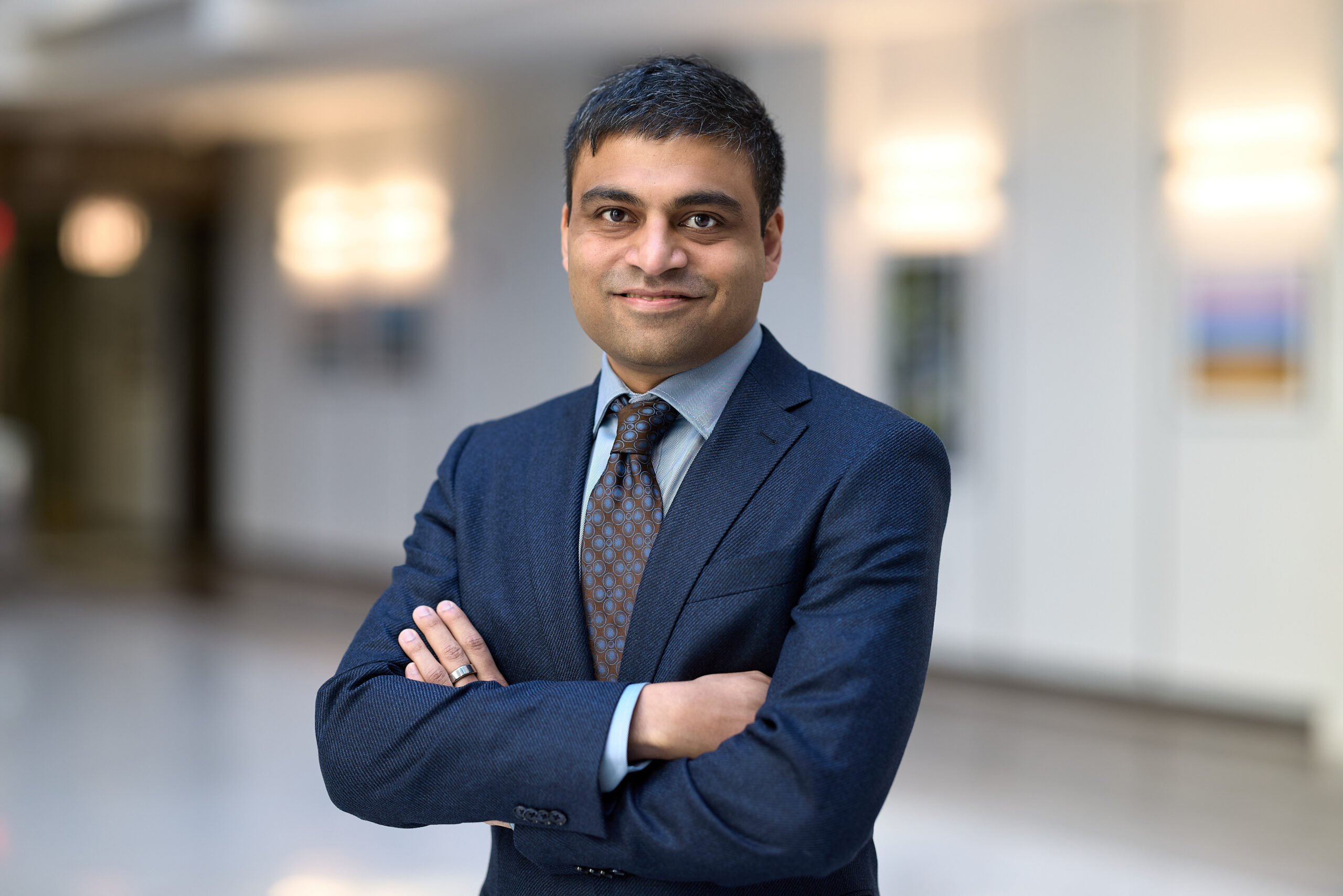
Ashwin Sawant, Assistant Professor at the Department of Artificial Intelligence and Human Health, is working to address this gap. His research explores whether artificial intelligence can be used to systematically identify near misses and unreported adverse events in hospitalized patients.
Research in this area has traditionally relied on manual chart reviews and expert adjudication. These approaches are resource-intensive and limit the scale at which safety events can be studied. As a result, large amounts of relevant information remain underutilized.
In his work, Ashwin Sawant combines real-world electronic health record data with large language models to support the identification of safety-relevant patterns. His approach integrates structured data from Mount Sinai’s safety event database with unstructured data such as clinical notes. This enables a more comprehensive and system-level view of patient safety.
Near misses are particularly valuable because they highlight risks before harm occurs. If these events can be identified with sufficient precision, they can inform the design of interventions aimed at preventing future incidents and improving care delivery.
The project relies on AIR·MS as a foundation for this type of work. AIR·MS provides a secure, governance-aligned environment that brings together data access, compute infrastructure, and AI tooling, enabling researchers to work with sensitive health data in a compliant and scalable way . Bringing together heterogeneous data sources and analyzing them at this level would be difficult without such an integrated platform.
A key capability for this research is the ability to perform fast full-text search across PHI-containing clinical notes. This makes it possible to efficiently explore large volumes of unstructured data and identify relevant signals that would otherwise remain difficult to access.
The work is carried out using tools such as Python, Jupyter Notebooks and the OMOP data model, supporting reproducible and flexible analysis across different data sources.
A central challenge in digital health research is the fragmentation of data across systems and formats. This project addresses that challenge by enabling integrated analysis across disparate datasets and reducing the effort required to move from data access to analysis and interpretation.
While the work is ongoing, the next steps include improving the precision of event detection and using these insights to inform the development of interventions. These can then be evaluated in clinical settings to assess their impact on patient safety.
Looking ahead, expanded access to de-identified clinical notes and free-text reports could further support this type of research while maintaining strong data protection standards.
Ashwin Sawant’s work demonstrates how AI can contribute to a better understanding of medical errors and support a more proactive approach to patient safety by making previously hidden events visible.